

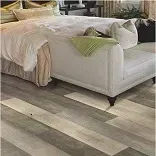



The Rule of Three: Balancing Floor, Cabinet, and Counter Tones in Any Room
The Rule of Three: Balancing Floor, Cabinet, and Counter Tones in Any Room
If you've ever stood in a kitchen or bathroom showroom feeling paralyzed by flooring samples, cabinet finishes, and countertop swatches, you're not alone. Choosing a cohesive color palette for your home is one of the most common pain points in interior design. It is also one of the easiest to solve once you understand a simple design principle professionals rely on: the Rule of Three.
NC Flooring Liquidators works with Triad-area homeowners every day who are facing exactly this challenge. Because the showroom carries flooring, cabinetry, and countertops under one roof, homeowners can lay samples side by side and check undertones in person rather than guessing between separate suppliers. NC Flooring Liquidators also offers free in-home consultations, bringing flooring, cabinet, and countertop samples directly into a homeowner's own lighting and decor for an even more accurate side-by-side comparison. That single-source approach, paired with in-home guidance, makes the Rule of Three far easier to put into practice, and the team is available to guide homeowners through each step outlined in this article, from identifying undertones to selecting an anchor material.
Key Takeaways
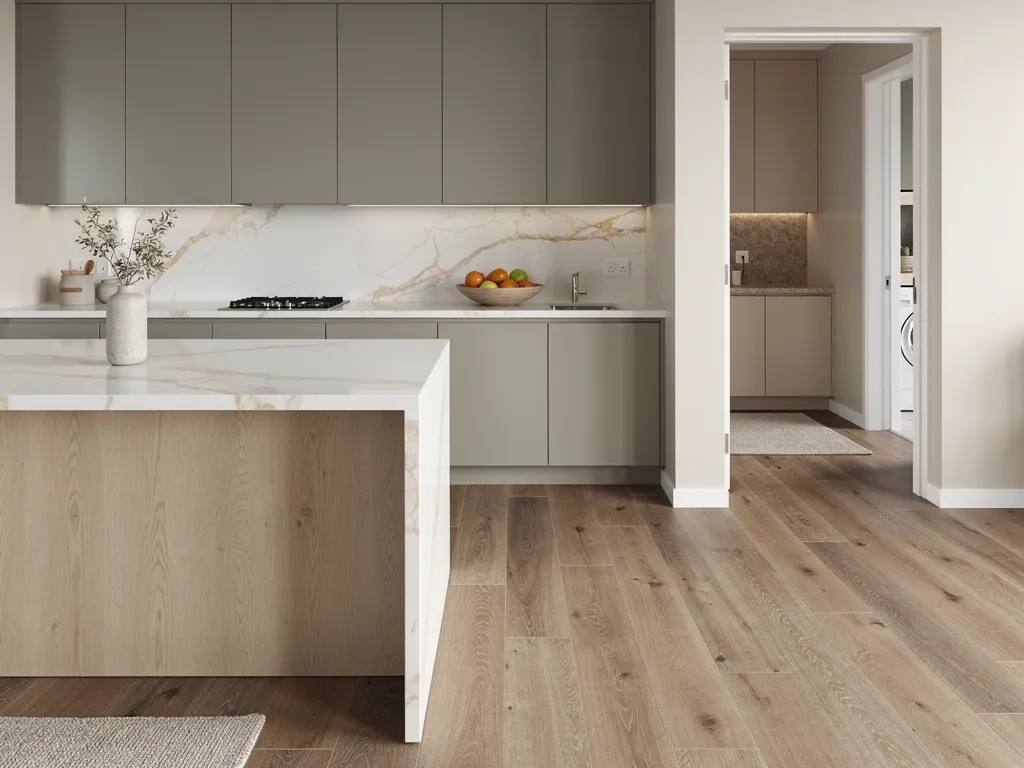
- The Rule of Three treats flooring, cabinetry, and countertops as one connected color system rather than three separate decisions.
- Matching undertones (warm-with-warm or cool-with-cool) matters more than matching exact shades across floor, cabinet, and counter tones.
- Anchor your palette to the hardest-to-change surface, usually flooring, before choosing cabinetry and countertops.
- Tonal contrast with undertone harmony creates a more dynamic look than matching every surface exactly.
- The same undertone-matching approach applies beyond the kitchen, including bathrooms and open-concept living spaces.
What Is the Rule of Three in Interior Design?
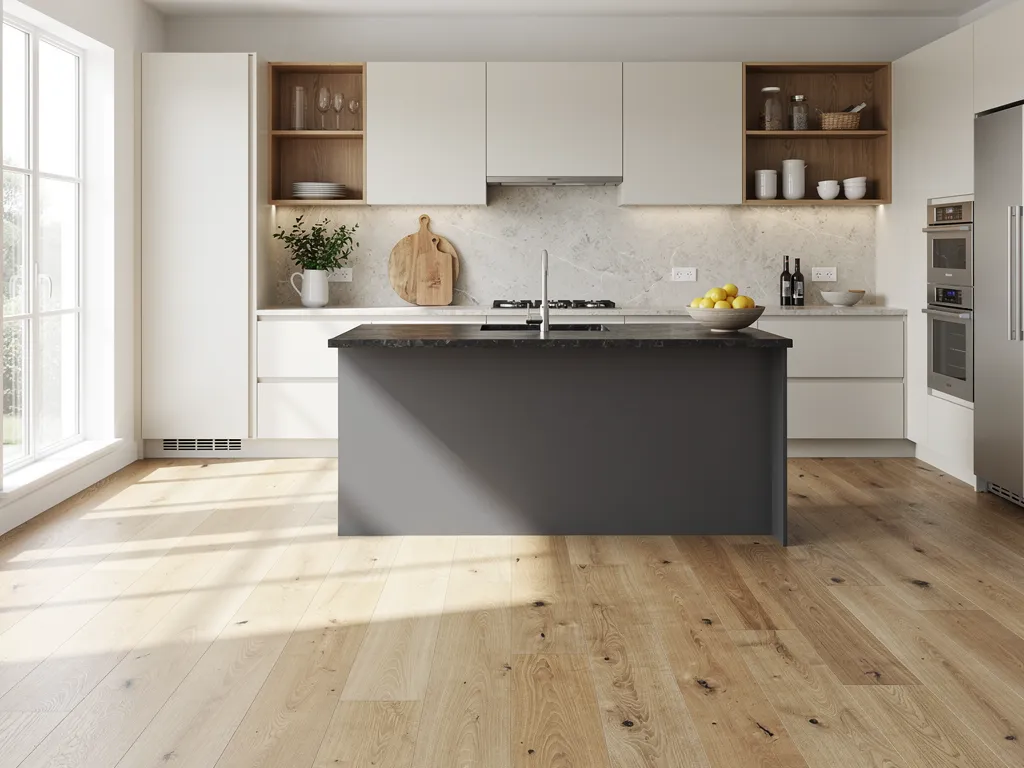
The Rule of Three is a color balancing technique that treats your floor, cabinetry, and countertops as a single connected system rather than three separate decisions. Instead of picking each surface in isolation, you choose one dominant tone, one secondary tone, and one accent tone that work together across all three elements. The result is a kitchen color scheme or bathroom palette that feels intentional, not accidental.
This approach borrows from a classic design ratio: roughly 60% dominant tone, 30% secondary tone, and 10% accent. Applied to a kitchen, that might mean 60% neutral flooring, 30% cabinetry in a complementary shade, and 10% countertop veining or backsplash tile that ties the two together. The specific percentages matter less than the underlying idea. Visual weight should be distributed, not evenly split three ways.
Why Matching Floor, Cabinet, and Counter Tones Matters
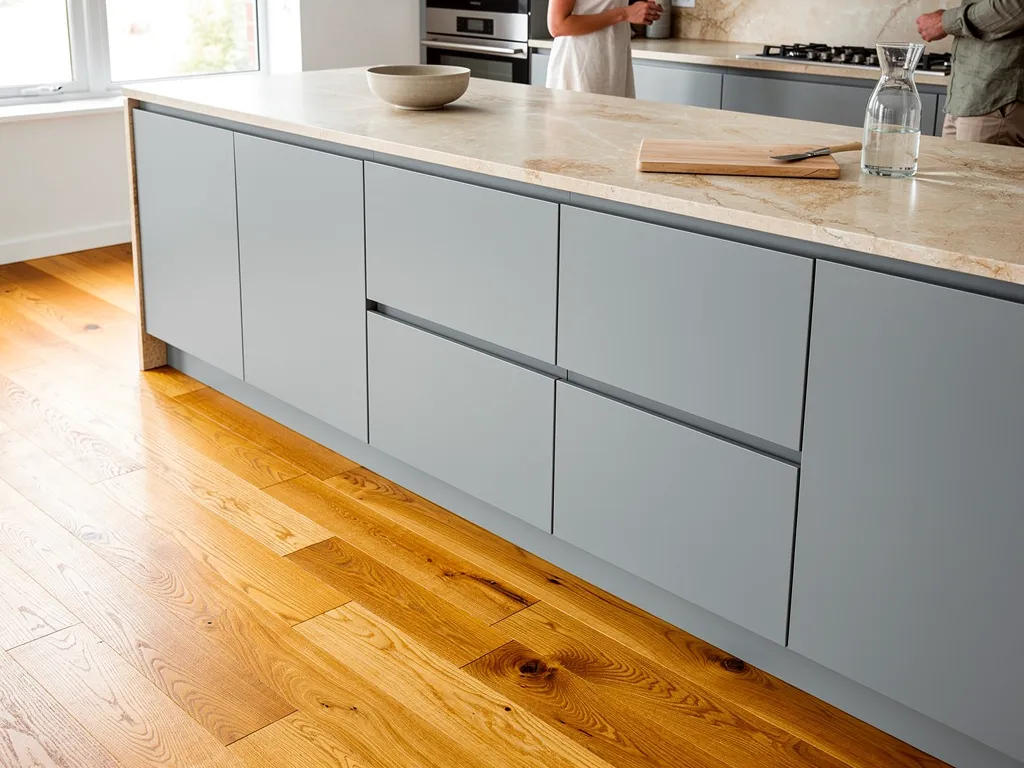
Matching floor, cabinet, and countertop colors is about undertones first, not exact shades. A room with mismatched undertones such as, warm honey-oak flooring paired with cool gray cabinets and beige countertops, can feel visually chaotic even if each material is beautiful on its own. This is one of the most common kitchen renovation mistakes homeowners make, and it's often the reason a newly remodeled space still feels "off" despite an expensive materials budget.
Undertone mismatches happen because materials are usually chosen at different stages of a project, often from different suppliers, without being viewed side by side. Flooring might get selected months before cabinet doors, and countertops are frequently the very last decision. By the time everything is installed, the undertones fight each other under natural and artificial light alike.
Step 1: Kitchen Undertone Matching, Identify Your Dominant Undertone
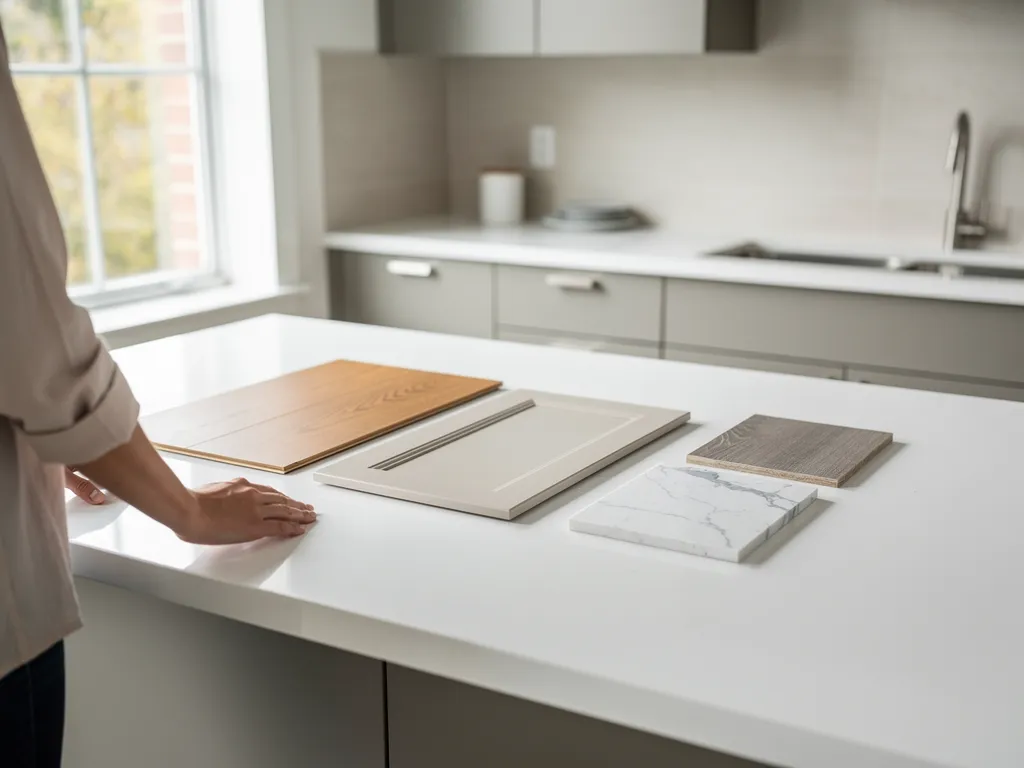
Before comparing samples, determine whether your existing or planned materials lean warm (yellow, orange, red undertones) or cool (blue, gray, green undertones). Wood flooring, for example, can range from warm amber to cool gray-brown depending on species and stain. Natural stone and quartz countertops carry their own undertones too. Even a "white" quartz can have subtle warm or cool veining.
A simple trick used by design professionals: lay your flooring sample, cabinet door sample, and countertop slab next to each other in the actual room, under the room's real lighting, at different times of day. Photos taken in natural daylight often reveal undertone clashes that showroom lighting hides.
Step 2: Choose Your Anchor Material
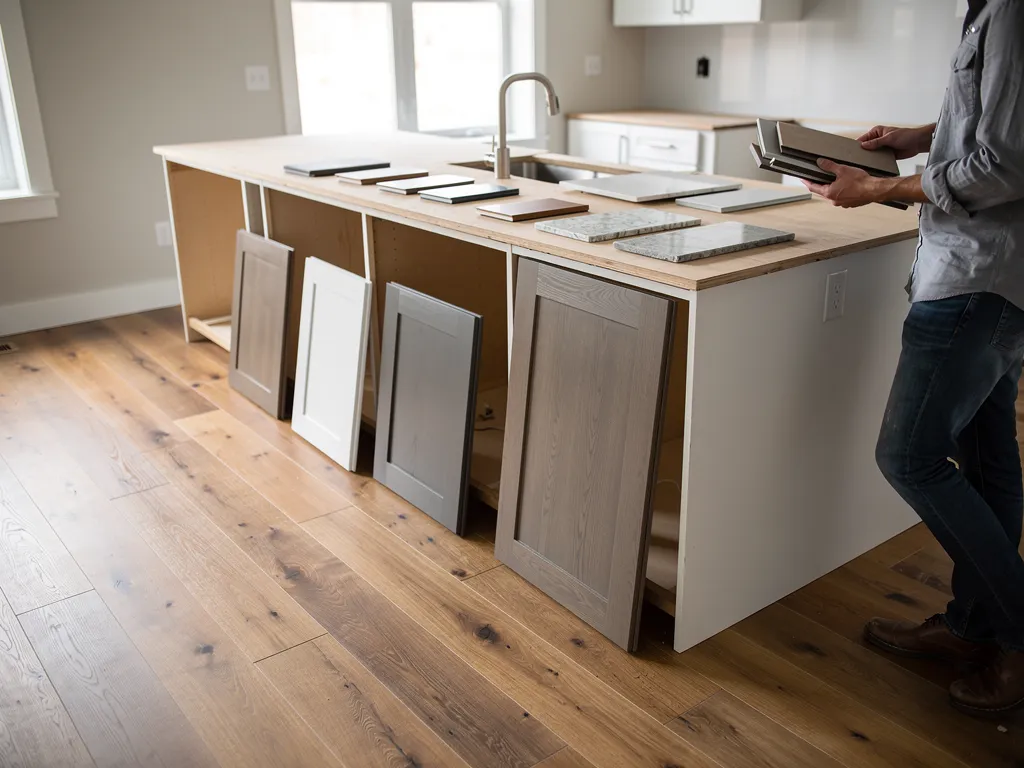
Most designers recommend anchoring your palette around the hardest-to-change surface. This is most typically flooring, since it's the most expensive and disruptive to replace. Once your flooring tone is locked in, cabinetry and countertops become easier decisions because you're now matching two elements to one, rather than balancing three unknowns simultaneously.
If you're working on a kitchen remodel on a budget, this sequencing also protects your wallet: it prevents costly do-overs where a countertop that looked perfect in the showroom clashes with flooring once installed.
Step 3: Layer in Contrast Intentionally
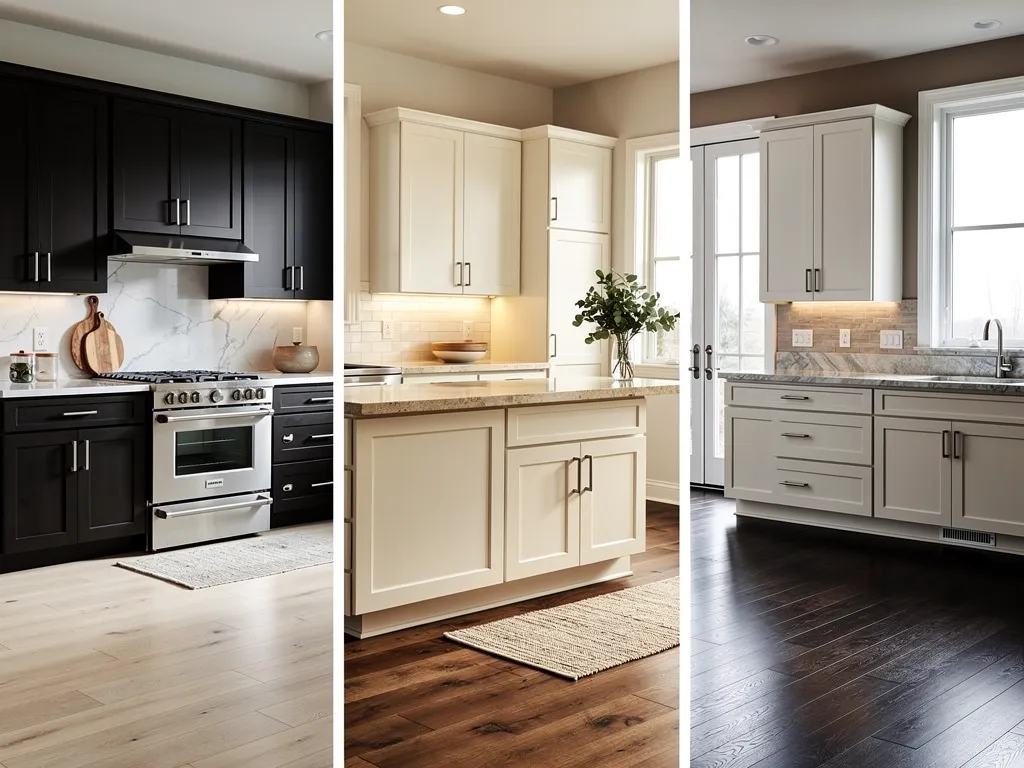
The Rule of Three isn't about matching everything exactly. Doing that can produce a flat, monotonous look. Instead, aim for tonal contrast with undertone harmony. A popular formula in modern kitchen design:
- Light floors + dark cabinets + light or veined countertops — a high-contrast look that feels current and makes cabinetry the visual anchor.
- Mid-tone floors + light cabinets + mid-tone countertops — a softer, more traditional palette that reads warm and inviting.
- Dark floors + light cabinets + dark or bold countertops — a dramatic, high-end aesthetic often seen in luxury kitchen design.
Each of these combinations still respects the same undertone family (warm-with-warm or cool-with-cool), which is the real key to cohesion. Not matching lightness or darkness exactly.
Applying the Rule of Three Beyond the Kitchen
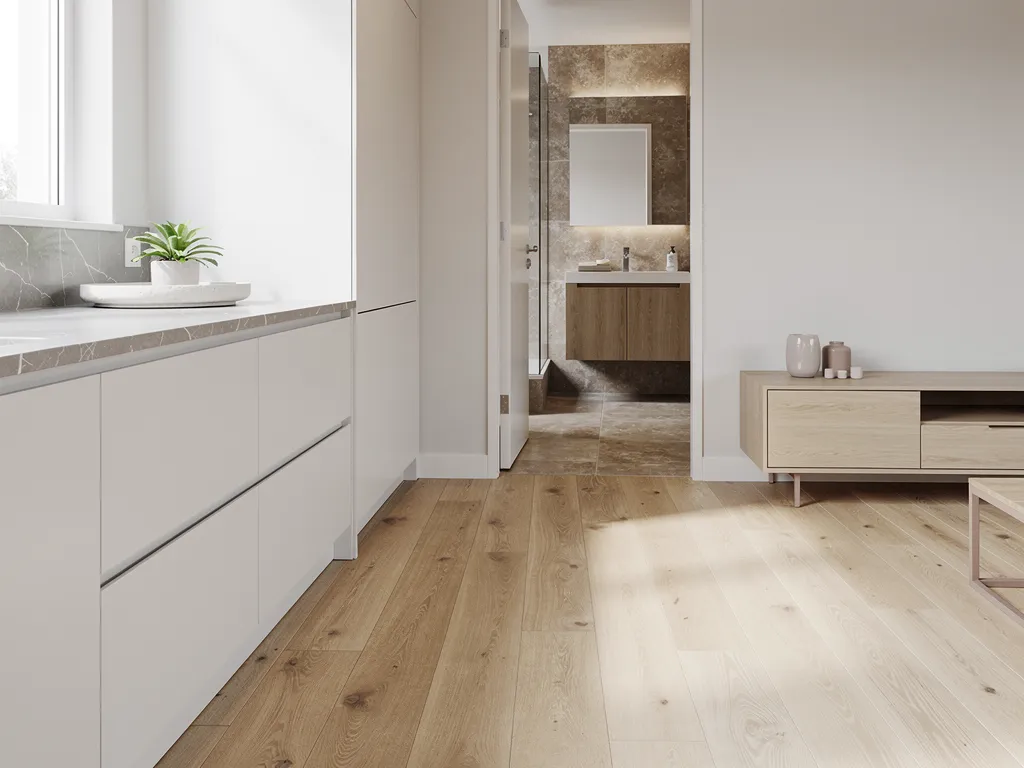
While this principle is most often discussed in kitchen design, it applies equally to bathroom remodel color schemes, laundry rooms, and open-concept living spaces where flooring flows between zones. In a bathroom, think of tile flooring, vanity cabinetry, and countertop or shower surround as your three surfaces. The same 60-30-10 logic and undertone-matching process applies directly.
For open floor plans, the Rule of Three can even extend room to room: if your kitchen flooring continues into a living area, your cabinetry undertone should harmonize with nearby furniture wood tones, not just the countertop.
Common Questions About Coordinating Kitchen Tones
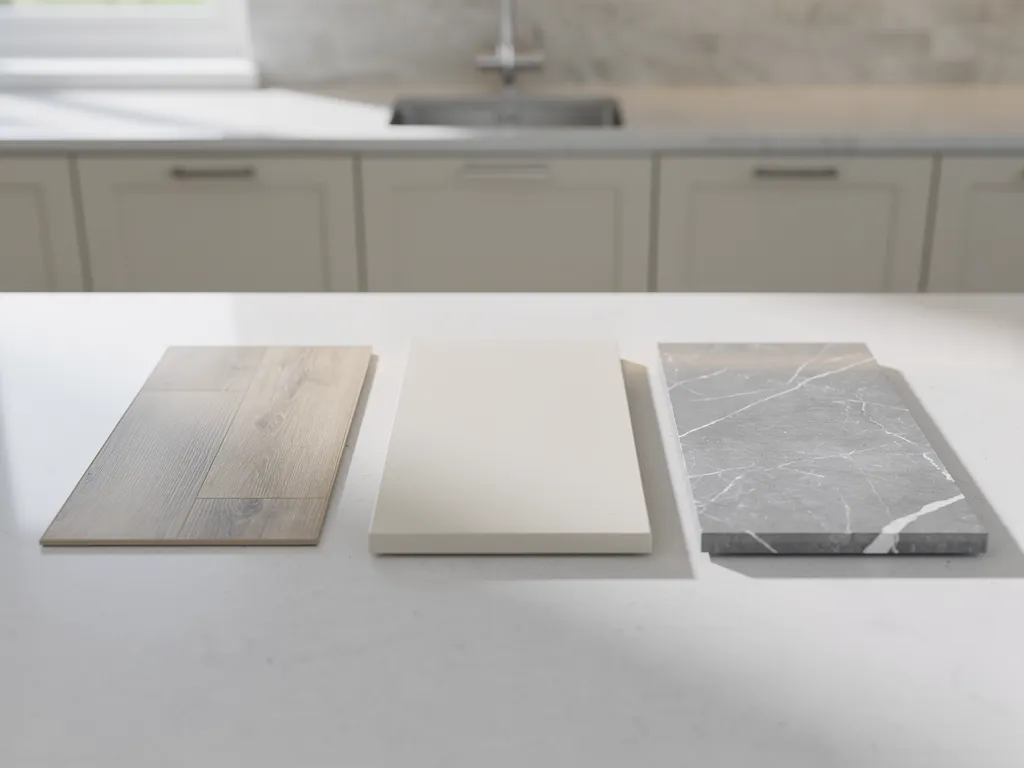
Do floors and cabinets need to match exactly? No and they shouldn't. Matching undertones (both warm or both cool) matters far more than matching exact shades. Some contrast between floor and cabinet tone actually creates visual depth.
What if I already have flooring and I'm only replacing countertops? Bring a physical flooring sample or a well-lit photo to the countertop showroom. Comparing swatches from memory is one of the leading causes of undertone mismatches in partial renovations.
Are neutral palettes always the safest choice? Neutrals are lower-risk, but "neutral" doesn't mean undertone-free. Greige, taupe, and off-white all skew warm or cool depending on their base pigments, so the same matching principles still apply.
How can I tell if a "white" quartz countertop is warm or cool? Look closely at the veining and background flecks under natural light. Warm whites often carry beige, cream, or gold undertones in the veining, while cool whites lean toward gray or blue. Comparing a sample slab against flooring and cabinet samples side by side is the most reliable way to catch a mismatch before installation.
Should the backsplash match the countertop or the cabinets? Either approach can work, as long as the backsplash stays in the same warm or cool undertone family as the rest of the room. A backsplash that bridges the countertop's veining and the cabinetry's base tone often ties the palette together more effectively than matching either surface exactly.
Is it possible to mix different wood tones for flooring and cabinetry? Yes, as long as the undertones align. A warm oak floor can pair well with a warm maple or cherry cabinet, even if the shades differ, because the underlying color family stays consistent. Mixing a warm wood floor with a distinctly cool-toned cabinet finish is where the pairing tends to break down.
Final Thoughts
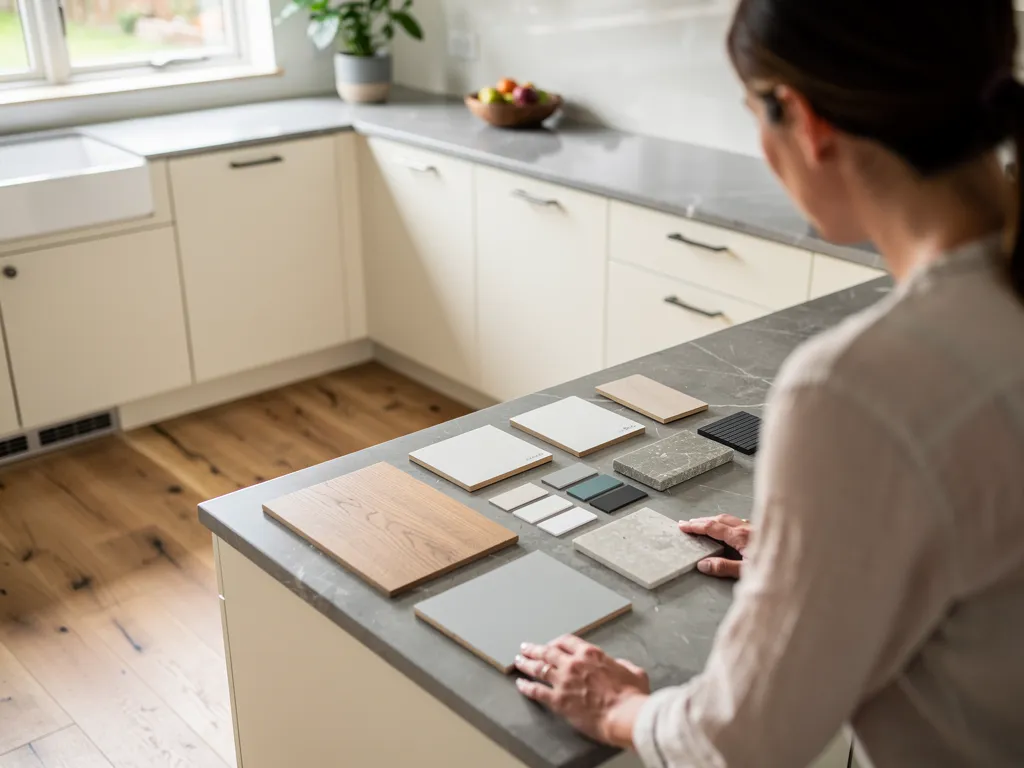
The Rule of Three turns an overwhelming design decision into a manageable, sequential process: identify your undertone, anchor your palette to your hardest-to-change surface, then layer in contrast with intention. Whether you're planning a full kitchen renovation or only swapping a countertop, this framework helps ensure your floor, cabinet, and countertop color combinations feel like they were designed together.
Coordinating floor, cabinet, and countertop tones does not have to be a guessing game. NCFlooring Liquidators, specializes in helping Triad-area homeowners apply the Rule of Three with confidence, sourcing flooring, cabinetry, and countertops under one roof so undertones are checked and matched before installation day, not after.
Homeowners planning a kitchen or bathroom remodel are encouraged to bring their existing samples or renovation plans to the NC Flooring Liquidators showroom at 128 Furlong Industrial Dr, Kernersville, NC 27284. For those unable to visit the showroom, NC Flooring Liquidators also offers free in-home consultations, bringing flooring, cabinet, and countertop samples directly to the homeowner's own space. The team can be reached by phone at +1 (336) 355-5525 or by email at [email protected], or by visiting ncflooringliquidators.com to explore flooring, cabinet, and countertop options in person before making a final decision.